




Everything You Need To Know About Pelmet Roller Blinds
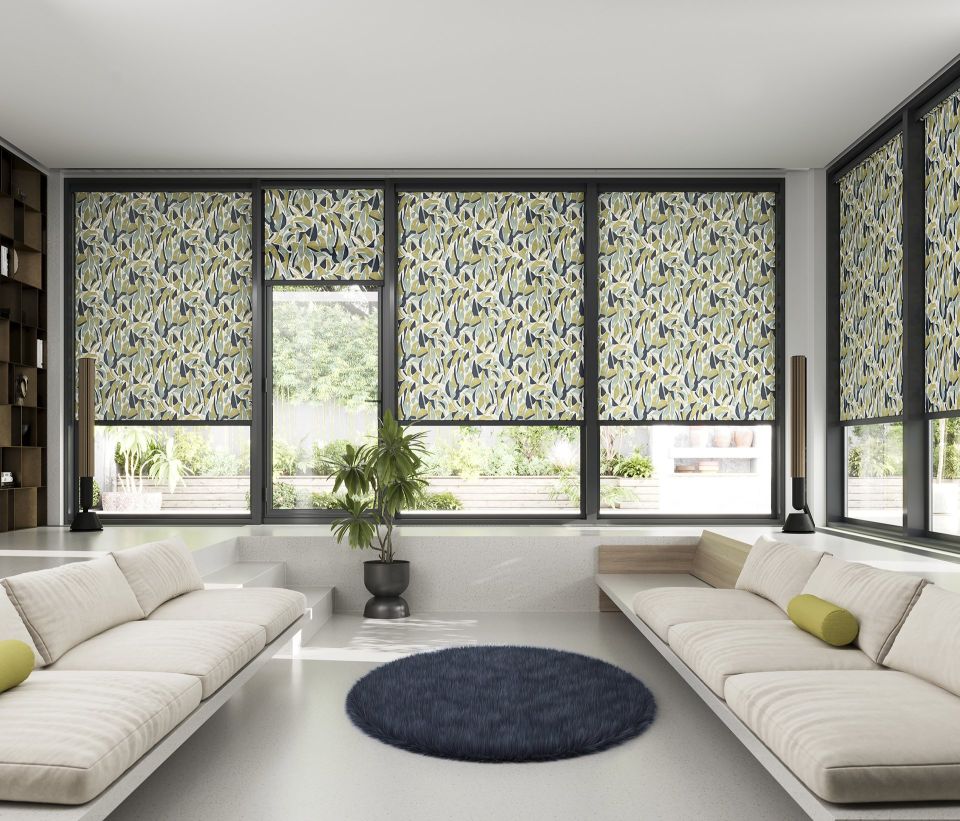
Pelmet roller blinds offer a refined, contemporary finish by concealing the top bar, brackets and mechanism behind a neat fascia. This added layer creates a cleaner look at the window, improves light control around the headrail and gives your roller blinds a more premium, built-in appearance. Whether you're updating a living room, bedroom or open-plan space, pelmet roller blinds provide both style and practicality.
As part of choosing the right option for your home, it’s helpful to understand how pelmet roller blinds are fitted, how they differ from standard roller blinds and how to remove a roller blind with a pelmet when redecorating or upgrading your window coverings. This guide will walk you through the key considerations so you can select a pelmet style that enhances your room and supports the way you use your space.
Top picks for Pelmet Roller Blinds
Best for bedrooms
If you're looking to create a serene sleeping environment, consider pelmet roller blinds that offer excellent light control. These blinds can be easily fitted with a pelmet to enhance insulation and reduce light leakage, ensuring a restful night.
Best for kitchens and bathrooms
For moisture-prone areas, opt for water-resistant pelmet roller blinds. They are easy to clean and maintain, making them ideal for kitchens and bathrooms where spills and humidity are common.
Best for large windows
When dealing with big feature windows, choose pelmet roller blinds that provide a seamless look and effective light management. A well-made pelmet can add a touch of elegance while ensuring your blinds operate smoothly.
Best for budget-friendly options
If you're on a budget, look for affordable pelmet roller blinds that don’t compromise on style. Many options are available that allow you to achieve a polished look without overspending.
40mm vs 70mm Pelmet Roller Blinds Options
Pelmet for roller blinds are designed to conceal the roller tube and brackets for a clean, modern finish, but they suit slightly different applications and visual effects. Two sizes are available to give different finishes.
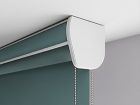
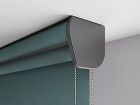
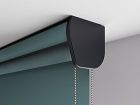
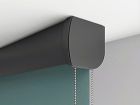
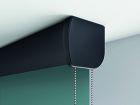
40mm Pelmet (Half Fascia)
- Slimmer, more compact profile – ideal where you want a discreet, minimal look.
- Works well with most standard window sizes using 32mm or 40mm roller systems.
- Available as a smooth fascia or with a fabric insert strip to match the blind fabric.
- Good choice when headroom is limited or you want the pelmet to sit quietly in the background.
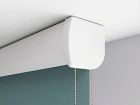
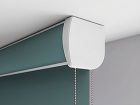
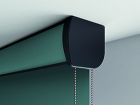
70mm Pelmet (Full Fascia)
- Deeper, full fascia that makes more of a design statement at the top of the blind.
- Offers greater coverage, helping to hide larger fabric rolls and enhance light blocking from above.
- Also available in smooth or fabric-insert versions for a coordinated look.
- Well suited to larger windows, tall drops or where you want the pelmet to be a visible feature.
Both 40mm and 70mm pelmets are manufactured from high-performance aluminium and offered in coordinating colours such as white, anthracite and black, so you can match the depth of the fascia to the scale and style of your room.
40mm Pelmet Roller Blinds
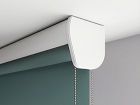
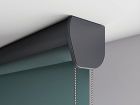
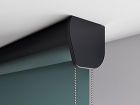
70mm Pelmet Roller Blinds

5 Things to Consider Before Choosing Pelmet Roller Blinds
When selecting pelmet roller blinds, it's essential to consider various factors that can impact both functionality and aesthetics. Here are some key considerations to help you make an informed decision:
- Material: Choose a durable fabric that complements your interior design. Consider options that offer light filtering or blackout capabilities, depending on your needs.
- Size: Measure your window accurately to ensure a perfect fit. Remember to account for the pelmet's dimensions when determining the overall size of your roller blind.
- Style: Pelmet roller blinds come in various styles. Decide whether you prefer a modern look or something more traditional to match your room's decor.
- Installation: Consider how to make a pelmet for a roller blind if you plan to DIY. Familiarise yourself with the installation process, including how to remove roller blind pelmets if necessary.
- Maintenance: Think about how easy it will be to clean your blinds. Some materials may require more upkeep than others, so choose wisely based on your lifestyle.
Types of Pelmet Roller Blinds
When selecting made to measure roller blinds with pelmet, it's essential to understand the various types available. Each type offers unique benefits and can enhance the aesthetic of your space while providing practical solutions for light control and privacy.
Standard Pelmet Roller Blinds
Standard pelmet roller blinds are a popular choice for many homes. They feature a simple design that complements various interior styles, providing a clean finish at the top of the window. These blinds are available in a wide range of fabrics and colours, allowing for easy integration into your decor.
Motorised Pelmet Roller Blinds
For added convenience, motorised pelmet roller blinds offer a modern solution. These blinds can be operated with a remote control or smart home system, making them ideal for hard-to-reach windows. Motorisation enhances usability and can also improve energy efficiency by allowing you to adjust light levels effortlessly.
Blackout Pelmet Roller Blinds
If you require complete darkness for sleeping or media rooms, blackout pelmet roller blinds are the perfect option. These blinds are designed with special fabrics that block out light entirely, ensuring a restful environment. They are particularly beneficial for bedrooms or home theatres where light control is crucial.
Thermal Pelmet Roller Blinds
Thermal pelmet roller blinds are designed to improve insulation in your home. By reducing heat loss in winter and keeping your space cooler in summer, these blinds can help lower energy bills. They are an excellent choice for those looking to enhance energy efficiency while maintaining style.
Customised Pelmet Roller Blinds
Customised pelmet roller blinds allow you to tailor every aspect to your preferences. From fabric choice to dimensions, these made to measure options ensure a perfect fit for any window. Personalisation can enhance both functionality and aesthetics, making your blinds truly unique.
Pelmet vs No Pelmet
Adding a pelmet changes how your roller blind looks and how it performs at the top of the window. Use this side-by-side comparison to decide whether a pelmet is the right upgrade for your space.
| Factor | With pelmet | Without pelmet |
|---|---|---|
| Appearance | Creates a sleek, built-in look by hiding the roller tube and brackets, giving a more finished, designer feel. | Tube and brackets remain visible, so the blind looks simpler and more functional at the top. |
| Light control | Helps cut down light bleed from above the fabric, especially useful with blackout or dim-out fabrics. | More chance of a light halo at the top of the blind where daylight can escape around the tube. |
| Dust & maintenance | Pelmets shield the top of the blind from dust, so the roller and brackets need less frequent cleaning. | Exposed hardware can collect dust more quickly and may need wiping down more often. |
| Design options | Choice of fascia colours and profiles, with the option to add a fabric insert to match the blind. | Limited to the fabric and bottom bar; there is no additional styling at the top of the window. |
| Cost | Higher overall cost because of the aluminium fascia and end caps, but with a more premium finish. | Lowest cost option, as you are only paying for a standard roller blind system. |
| Best for | Bedrooms, living rooms and feature windows where a neat, streamlined finish really matters. | Utility rooms, rentals and simple projects where budget and basic function come first. |
In short: a pelmet adds polish and better top light control, while a standard roller blind without a pelmet keeps things simple and more budget-friendly.
40mm Pelmet vs 70mm Pelmet
The Cruze system offers two fascia depths – 40mm and 70mm – so you can match the scale of your pelmet to the size of your window and how bold you want the finish to be.
| Factor | 40mm pelmet | 70mm pelmet |
|---|---|---|
| Look & proportion | Compact and understated, sitting close to the ceiling or frame and working well on smaller to medium blinds. | Deeper, more architectural fascia that makes more of a feature of the blind on tall or wide windows. |
| Visual impact | Blends in neatly with the room, adding a clean edge without dominating the wall. | Creates a bold top line that frames the fabric and draws the eye to the window as a design statement. |
| Light control above the blind | Improves light blocking at the top of the fabric compared with no pelmet, with a slimmer projection. | Offers the strongest top light control thanks to its extra depth, helping to cut down haloing even more. |
| Suitability by window size | Ideal for standard window sizes, smaller drops and narrower openings. | Ideal for picture windows, tall drops, doors and wide runs of blinds where scale matters. |
| Design combinations | Available as a plain aluminium fascia or with a fabric insert for extra softness and coordination. | Also available as plain fascia or fabric insert, giving the same options in a more substantial profile. |
| Best for | Rooms where you want a subtle, refined finish without too much projection from the wall or ceiling. | Spaces where you want a dramatic, designer look and maximum performance from your pelmet system. |
In short: 40mm pelmets are neat and subtle; 70mm pelmets are deeper, more striking and give the best top-light blocking for larger blinds.
Full Fascia vs Fabric Insert Fascia
Both fascia styles tidy up the top of the blind; the choice is whether you prefer a clean aluminium edge or a fascia that carries the blind fabric across the front for a softer, coordinated look.
| Factor | Full aluminium fascia | Fabric insert fascia |
|---|---|---|
| Overall look | Minimal, solid aluminium profile that gives a crisp architectural line above the fabric. | Front face includes a strip of the blind fabric, softening the fascia and tying it into the design. |
| Design style | Perfect for contemporary, monochrome or industrial interiors where metal details tie everything together. | Perfect for softer schemes where you want the pelmet to blend into the fabric rather than stand out on its own. |
| Colour & coordination | Limited to fascia colours such as white, anthracite or black to match frames and hardware. | Lets you echo the exact blind fabric in the fascia, so the top and drop feel like one continuous panel. |
| Visual emphasis | Draws attention to the clean aluminium edge and the outline of the window. | Puts more emphasis on the fabric and can make the whole window treatment feel softer and more integrated. |
| Where it works best | Kitchens, home offices and commercial spaces where a sharp, technical finish is preferred. | Living rooms, bedrooms and feature windows where a fully coordinated, interior-designed look is the priority. |
| Future flexibility | Fascia colour stays constant even if you later change the blind fabric. | Changing the fabric will also change how the fascia looks, giving you scope to refresh the whole window in one go. |
In short: choose a full aluminium fascia for a clean, minimal edge; choose a fabric insert fascia when you want the pelmet to feel softer and fully coordinated with your blind fabric.
How to Measure pelmet roller blinds correctly
Accurate measuring is what makes a made-to-measure pelmet roller blind look like it was built for your window. In this section we’ll walk through the basics, including different ways the blind can sit (inside the recess, face-fit/outside recess, or using an existing headrail where relevant).
If you want full step-by-step diagrams, measuring tolerances and drill positions, you can follow our full measuring guide for pelmet roller blinds if you’d like a detailed walkthrough.
Inside vs Outside Recess: Which Fit Is Right?
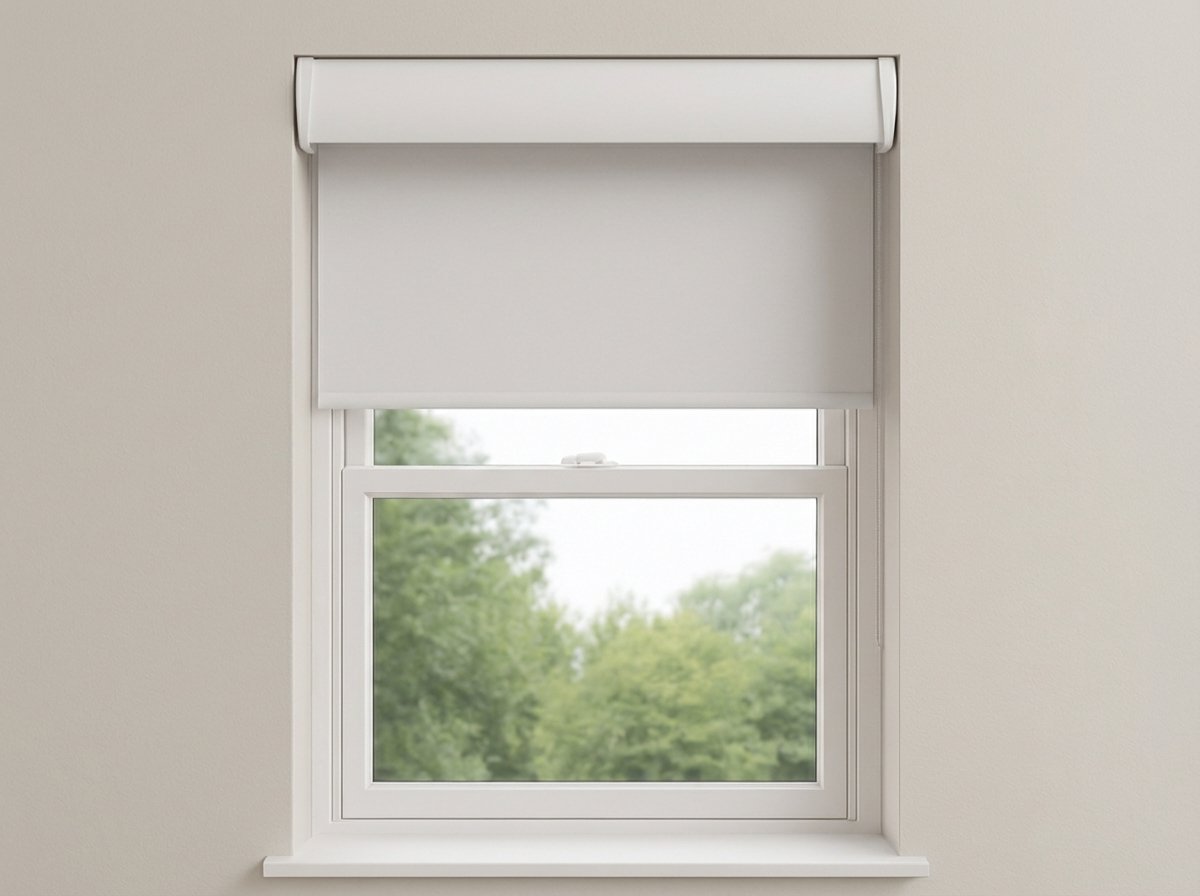 | 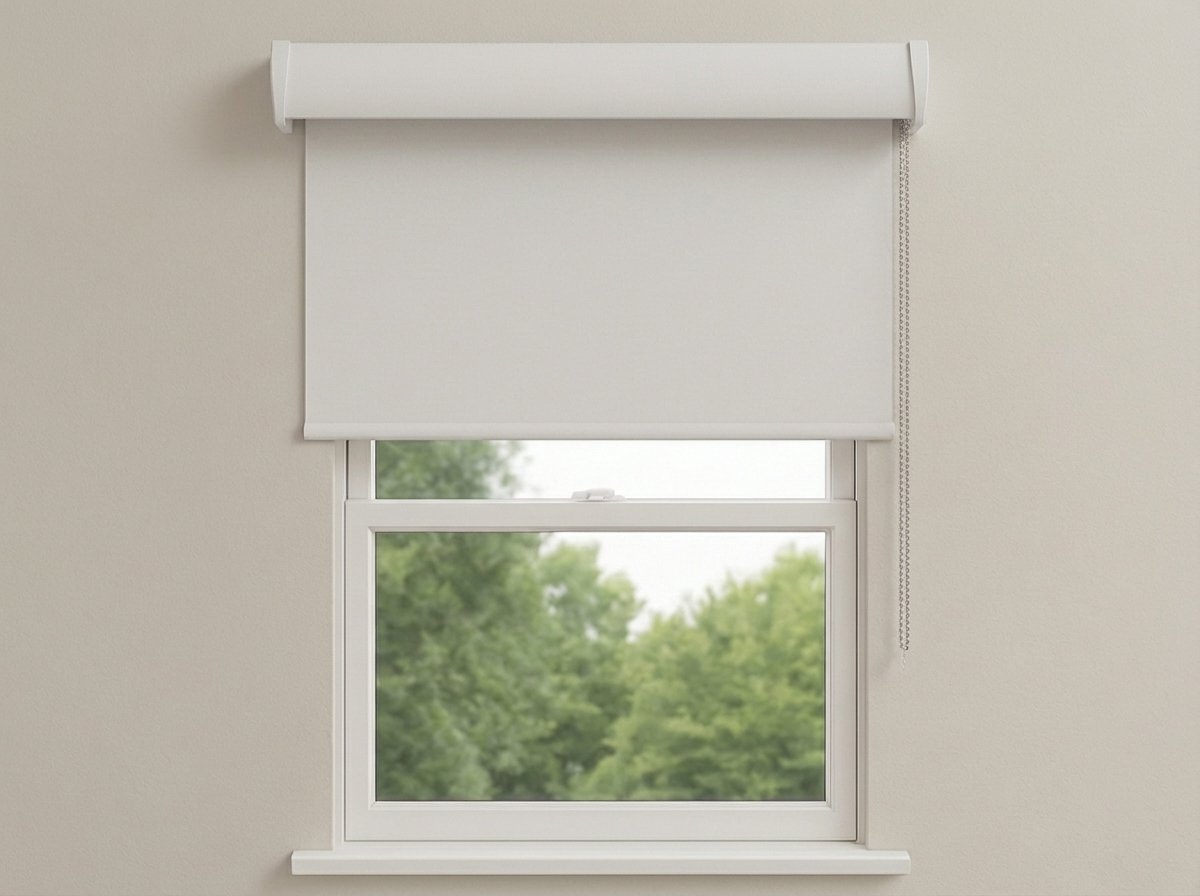 |
Inside recess — This fitting style offers a neat, built-in look that hugs the window frame, creating a seamless appearance. | Outside recess (face-fit) — This mounting style is fitted over the frame, providing better blackout capabilities and covering any gaps for enhanced light control. |
Choosing between inside and outside recess fitting affects the visual finish and light control of your pelmet roller blinds. Inside recess fittings offer a sleek look but may allow some light gaps, while outside recess fittings provide better blackout and coverage. Accurate measuring is essential for both styles to ensure a perfect fit.
| Factor | Inside recess / built-in style | Outside recess / face-fit style |
|---|---|---|
| Look & finish | This approach creates a polished, integrated appearance within the window frame. | The face-fit style offers a bold look that stands out and can cover any irregularities in the recess. |
| Light control / coverage | It closely follows the frame, but may allow some light to seep through the edges. | Provides excellent blackout and privacy by overlapping the window frame. |
| Measuring accuracy | Requires precise millimetre measurements for a snug fit. | More forgiving; you can often use existing sizes for reference. |
| Obstacles / clearance | Consider any handles or tiles that may obstruct the blind's movement. | Typically less of a concern, but ensure there’s enough space for mounting. |
| Best for | Ideal for a clean, integrated look in modern interiors. | Best for maximum blackout or when covering uneven window shapes. |
How to Measure for an Inside Recess Fit
Use this method if you want a neat, built-in look. Ensure you measure in millimetres and record the tightest measurement for the best fit.
- Measure the width at the top of the recess where the pelmet is to be fitted.
- Measure the drop at several points to ensure accuracy.
- Check for any obstructions like handles or tiles that could interfere.
- Send us the exact measurements without rounding up; we’ll handle any fitting allowances.
Inside-style tips:
- Always use millimetres for precision.
- Record the smallest measurement for a snug fit inside the recess.
- Note any potential obstructions that could hinder movement.
How to Measure for an Outside Recess (Face-Fit)
Choose this if you want maximum blackout or to cover an uneven recess. Ensure you measure in millimetres for the best results.
- Measure the width, adding approximately 35mm past each side for optimal blackout.
- Be clear whether you’re providing the recess size or the finished blind size; we need the finished size for pelmet roller blinds.
- Confirm there’s enough mounting space or compatibility with the existing headrail.
- Ensure any overlaps for blackout are accounted for, and that all slats align at the bottom.
Outside-style tips:
- Consider how much coverage you need for blackout or match your existing slat length.
- Note any uneven recess or out-of-square windows that may affect the fit.
- Clarify whether to provide the exact finished size or the raw opening size.
Fitting & Installation Basics
Fitting pelmet roller blinds is normally straightforward. Here’s a quick overview of the steps involved in how to fit pelmet roller blinds:
- Mark where the brackets or headrail will be installed.
- Drill and secure the brackets or clip into the existing headrail.
- Attach the pelmet roller blind and test its operation.
If you can drill a couple of holes – or clip into an existing headrail – you can usually fit pelmet roller blinds.
Common Measuring Mistakes to Avoid
- Guessing instead of measuring: Never assume two windows or two slats are identical.
- Rounding up: Always record the tightest millimetre measurement instead of a neat, rounded number.
- Mixing up fabric width and overall fit size: Be clear whether you're giving us the recess size, the finished blind size, or the slat drop.
- Forgetting obstacles or hardware: Handles, tiles, or headrail hangers can affect the final fit if you don't allow for them.
We can double-check your numbers before anything is custom-made, so you can measure with confidence.
Ready to Order?
Now that you’ve measured confidently, you’re ready to choose your fabric and finish. If you’d like extra reassurance before you drill or clip anything into place, you can also check our fitting & installation guide for pelmet roller blinds, which walks you through fixing the brackets and doing a final safety check.
Feel free to browse our pelmet roller blinds range, and remember we’ll happily double-check your sizes before anything is custom-made.
Quick Checklist
- Determine the style: Decide whether you prefer a modern or traditional look for your window blind pelmet.
- Measure accurately: Ensure you measure the width and height of your roller blind to create a perfectly fitting pelmet.
- Choose materials wisely: Select materials that complement your existing decor and are durable enough for daily use.
- Learn how to make a pelmet for a roller blind: Follow step-by-step guides to create a custom pelmet that suits your needs.
- Consider motorisation: If convenience is key, explore motorised options for your roller blind pelmet.
- Know how to remove roller blind pelmets: Familiarise yourself with the process to easily take down or replace your pelmet when needed.
- Check for compatibility: Ensure your chosen pelmet design works well with the specific roller blind model you have.
- Explore different finishes: From fabric to wood, the finish of your pelmet can significantly impact the overall aesthetic.
Why choose Pelmet Roller Blinds from Lifestyle Blinds?
With over 30 years in the blinds industry – and 20 years online – we’re one of the UK’s most experienced made-to-measure specialists. Every blind is crafted to order and backed by quality you can trust.
- Expertly made-to-measure in the UK
- Free fabric samples so you can choose confidently
- 5-year guarantee for peace of mind
- Motorised and child-safe upgrade options
- Most orders dispatched in around 7 working days
- Secure checkout and friendly specialist support


How to Clean Pelmet Roller Blinds
Keeping Pelmet Roller Blinds clean is simple — just match the method to the fabric.
For Water-Resistant / PVC Fabrics
For wipe-clean care, use a damp cloth or kitchen towel to gently wipe the surface. These materials are particularly ideal for kitchens and bathrooms, where spills are more likely. For more options, explore our range of wipe-clean Pelmet Roller Blinds.
For Polyester or Cotton Fabrics
Lower the blind fully and wipe gently from top to bottom with a damp cloth. After cleaning, leave the blind down to air-dry with a window open for about an hour to ensure it dries thoroughly.
Mechanism & Chain Care
To maintain the mechanism, apply silicone spray for smooth operation. Wipe the control chain with a damp cloth, and for stubborn marks, use warm soapy water to clean effectively.
Ready to choose your Pelmet Roller Blinds?
Now that you know how to make a pelmet for a roller blind and the benefits of adding one, it’s time to find the perfect fit for your windows.
Shop Pelmet Roller BlindsNeed more information? Explore Pelmet Roller Blinds for additional tips and options.